When most investors read about Cost of Equity, they encounter the classic formula:
Re = Rf + β × (Rm – Rf)
In other words, the expected return on equity equals the risk-free rate plus a risk premium based on market volatility. On paper, it looks neat. On paper, it promises a precise measure of whether a company creates or destroys value.
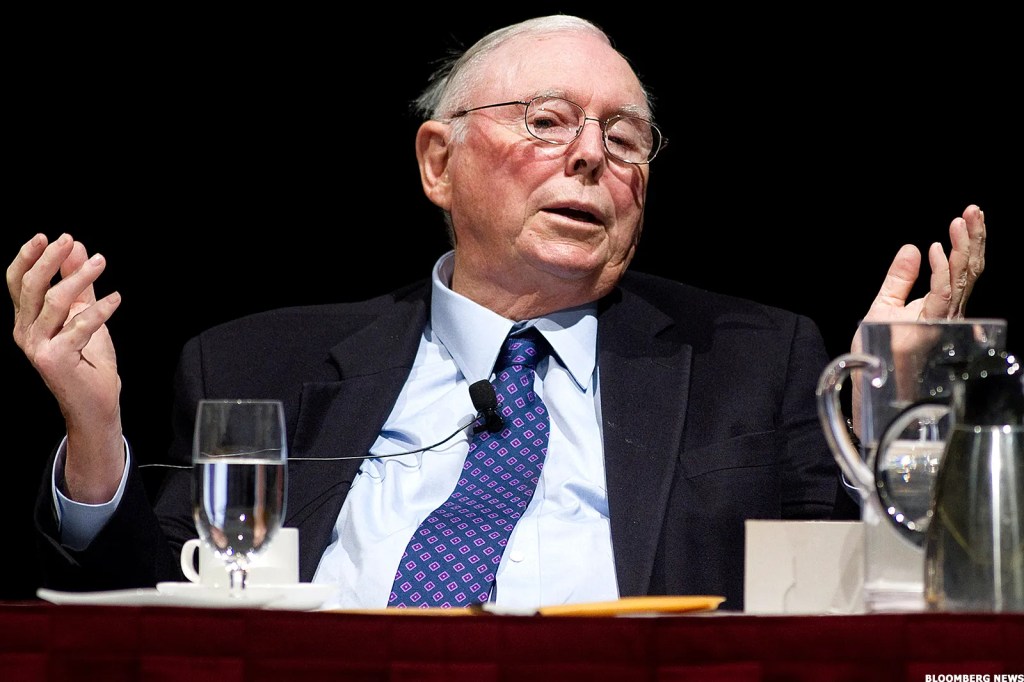
But as Charlie Munger has often pointed out, reality is far more complex.
1. Cost of Equity Isn’t a Bill Companies Pay
A common assertion is:
“If a company can’t earn more than its Cost of Equity, it’s destroying shareholder value.”
This statement assumes Cost of Equity is a concrete threshold. In practice, it is not a cash outflow or a bill that companies settle. Real value is destroyed only when capital is allocated poorly not because a formula says so.
A business can have volatile returns yet compound wealth for decades. Walmart, for example, doesn’t calculate beta before deciding to open a new store. Its true measure of value creation is how effectively it deploys capital relative to real economic opportunities, not a theoretical hurdle derived from market volatility.
2. CAPM Assumptions Rarely Hold in the Real World
The CAPM formula relies on several assumptions that rarely exist outside of textbooks:
- Investors hold the entire market portfolio. Rarely true.
- Volatility equals risk. Volatility measures price movement, not business risk.
- Markets are perfectly efficient. History shows persistent mispricings.
- You can borrow and lend at the risk-free rate. Not practically available for most investors.
- A single number can summarize business risk. Risk is multi-dimensional and contextual.
The key takeaway: CAPM offers a framework for discussion but not a precise measure of whether a company is creating or destroying value.
3. Volatility Is Not the Same as Risk
The common narrative suggests:
“If a savings account pays 4%, why would you buy a volatile stock earning 4%?”
This misses the point. A stock does not offer a guaranteed return like a savings account. Its value comes from residual claims on a business that can grow over time. Volatility in price often presents opportunity, not danger. Judging risk by price swings alone is a category error.
4. True Value Creation is About Probable Outcomes
A more practical question for investors is:
“Given what I know about this business, its competitive position, its durability, and its management, what returns are reasonable to expect over time?”
Real value creation depends on:
- Sustainability of competitive advantage
- Quality and reinvestment of cash flows
- Financial leverage and risk management
- Sensitivity to macroeconomic and regulatory changes
Not on a single beta number or a mechanical formula.
5. The Common Sense Approach
Charlie Munger’s perspective emphasizes clarity and common sense:
The “right” cost of equity is the return you need to justify owning a particular business, based on its fundamentals and your opportunity cost.
This requires judgment, not a formula. It requires understanding the business, the quality of its management, and the durability of its earnings factors that no model can fully quantify.
Conclusion
Cost of Equity and CAPM are helpful tools for framing risk and reward, but they should never replace careful, judgment-driven analysis. Investors who focus on the quality of the business, the durability of cash flows, and the practical realities of risk are far better positioned to understand whether value is being created or destroyed.
Formulas can guide thinking, but they are not substitutes for insight.
 BargaInvest Capital
Leave a comment